Fashion designers do not usually think of themselves as mathematicians. And mathematicians, with some notable exceptions, do not usually think of themselves as fashion designers. But the two disciplines share something fundamental: an obsession with pattern. And when those obsessions collide, the results are more beautiful than either field could produce alone.
The relationship between mathematics and design is ancient. The Greeks built the Parthenon using proportions that approximate the golden ratio. Islamic artists created tessellations of staggering complexity centuries before mathematicians formalized the underlying geometry. What is new is the way this relationship has entered the world of everyday fashion — not just in haute couture, but in the shirts and scarves and accessories that ordinary people wear.
The Fibonacci Spiral in Your Closet
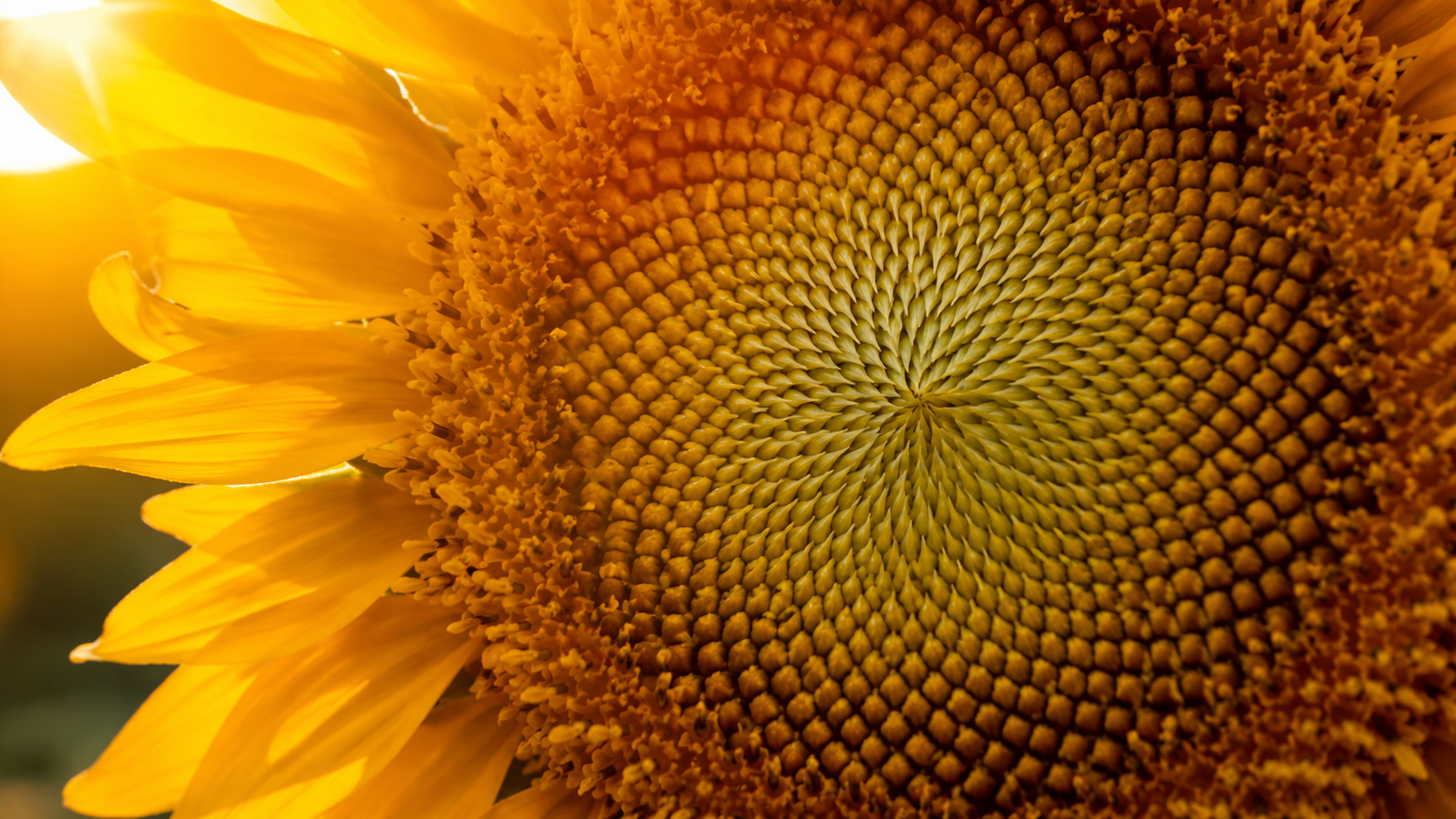
The Fibonacci sequence — 1, 1, 2, 3, 5, 8, 13, 21, and so on, with each number being the sum of the two before it — generates a spiral that appears everywhere in nature. Sunflower heads. Hurricane formations. Galaxy arms. And increasingly, in the prints and patterns of modern clothing design.
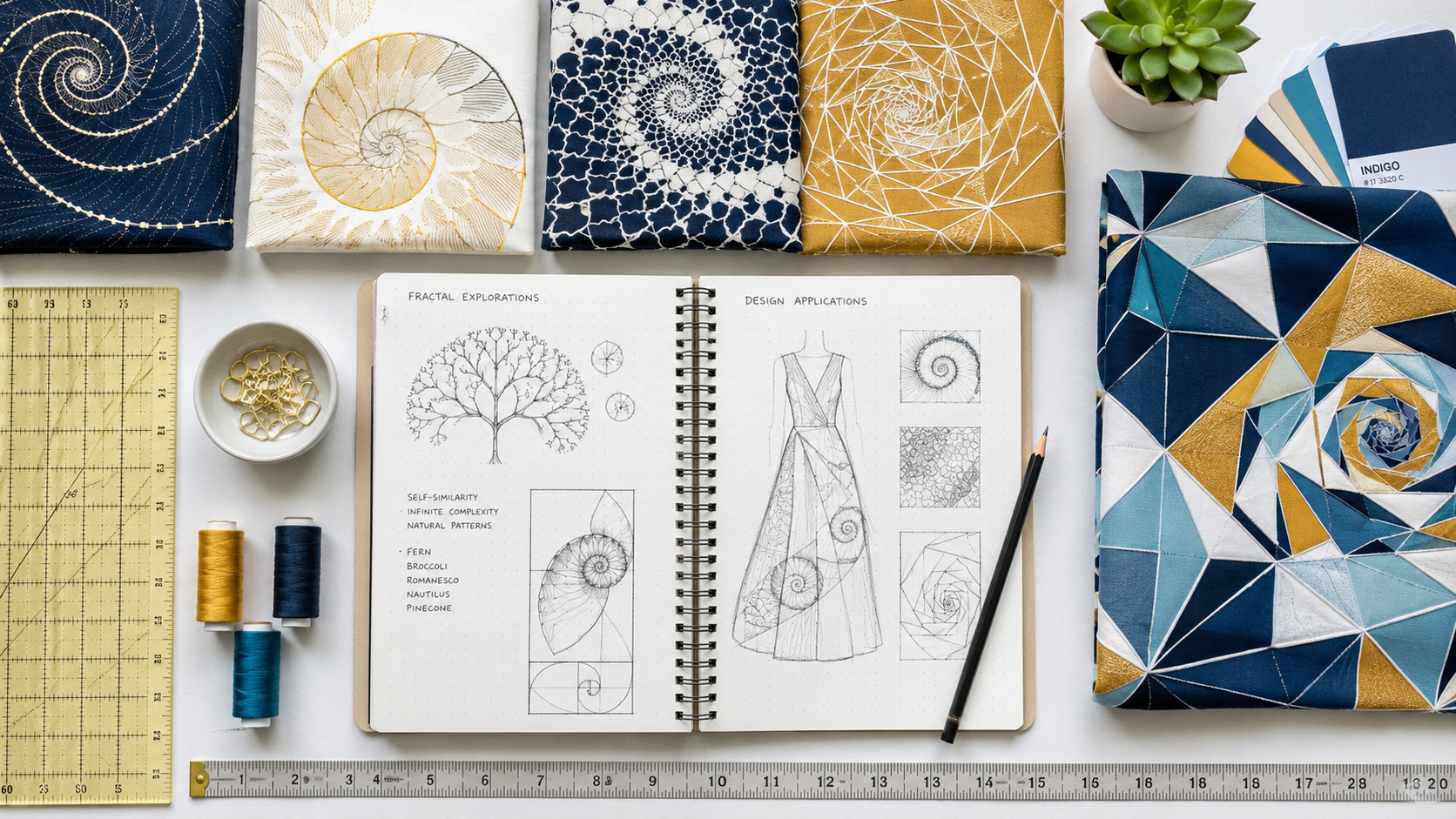
Designers have discovered that patterns based on the Fibonacci spiral possess an inherent visual harmony that purely random or purely regular patterns lack. It is the same reason we find sunflowers beautiful — our brains are wired to respond to these proportions. A scarf with a Fibonacci-inspired pattern does not just reference mathematics. It exploits mathematics to be more beautiful.
Fractals on Fabric
Fractals — patterns that repeat at every scale — have had an even more dramatic impact on textile design. Traditional fabric patterns tend to be based on simple repetitions: stripes, checks, polka dots. Fractal-based patterns offer something richer. Like a coastline viewed from space and then from a cliff and then through a magnifying glass, they reveal new details at every level of observation.
African textile traditions have used fractal patterns for centuries, a fact documented beautifully by mathematician Ron Eglash in his research on African fractals. These patterns were not derived from formal mathematical theory — they emerged from cultural practices that intuitively grasped the beauty of self-similarity. Modern designers are now combining these traditional approaches with computational tools to create fractal patterns of extraordinary sophistication.
The Golden Ratio Gets Dressed
The golden ratio — approximately 1.618 — appears in fashion more often than most people realize. The proportions of a well-cut suit, the placement of a waistline on a dress, the relationship between the width and height of a collar — all of these can be understood through the lens of golden ratio proportions. Fashion designers may not calculate these ratios explicitly, but the trained eye gravitates toward them naturally.
This is what makes the intersection of math and fashion so fascinating. It is not that designers are applying formulas. It is that the same mathematical principles that govern natural beauty also govern our aesthetic preferences in clothing. The math is not imposed on the design. It was already there, embedded in our sense of what looks right.
Wearing the Equation
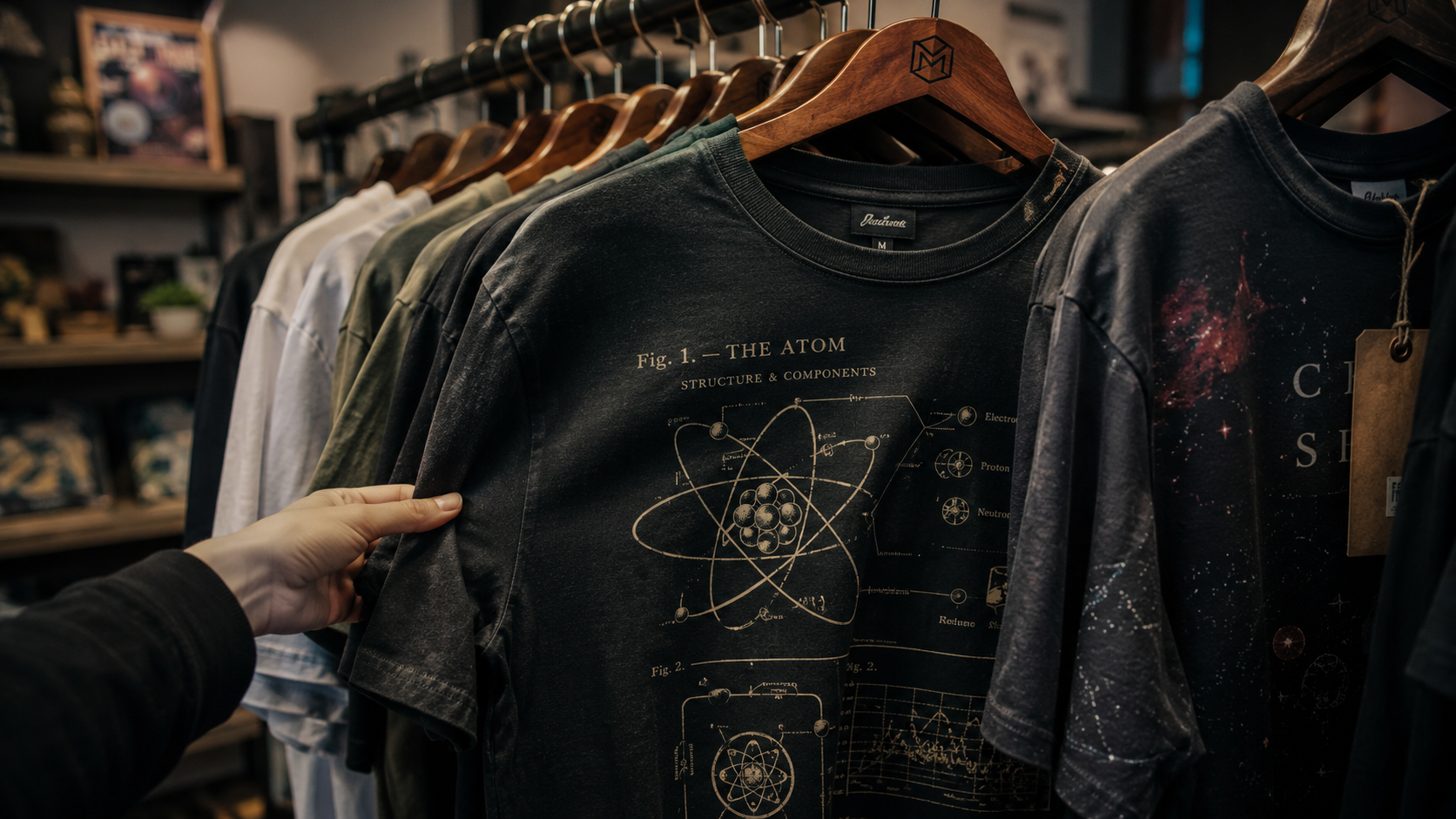
Beyond pattern and proportion, there is a growing movement of clothing that celebrates mathematical concepts explicitly. Shirts featuring elegant renderings of the Mandelbrot set. Dresses printed with Voronoi diagrams. Jewelry shaped like Mobius strips and Klein bottles. These pieces do not just use math to be beautiful — they make math itself the subject of beauty.
This explicit celebration of mathematical concepts in fashion represents something important: the erosion of the artificial boundary between "creative" and "analytical" thinking. The person who wears a fractal-patterned jacket is making a statement about the unity of art and science, whether they know it or not.
Leonardo da Vinci would have approved. He never saw a distinction between the scientific and the artistic. For him, understanding the mathematics of proportion was inseparable from creating beautiful work. Five centuries later, fashion is finally catching up to his vision — one Fibonacci spiral at a time.